

Written by J.A. Murray – Independent writer
Why laboratory negligence and student safety demands urgent attention
Laboratory negligence and student safety remain a pressing concern in modern universities. Academic laboratories train future scientists, but doing so exposes students to hazardous chemicals, equipment, and procedures. When individuals ignore or misunderstand protocols, preventable injuries occur. Recent scholarly research from 2022–2026 confirms that unsafe behaviors, weak supervision, and fragmented safety cultures remain leading contributors to laboratory incidents [1][4].
The issue of laboratory negligence and student safety extends beyond isolated mistakes. Empirical studies demonstrate that institutional practices, training quality, and leadership engagement directly influence whether students follow safety procedures [2][4]. When safety culture weakens, negligence becomes normalized and risks increase. This academic news-style analysis examines recent case studies on laboratory negligence and student safety, identifies root causes, and evaluates preventive strategies supported by current scholarly research.
Although historical incidents such as the UCLA tert-butyllithium accident shaped regulatory reform, contemporary studies reveal that similar risk patterns persist [5]. Understanding these patterns is essential for preventing future incidents and strengthening safety culture in university laboratories.
Laboratory negligence and student safety in recent university case studies
Recent peer-reviewed research highlights recurring patterns of negligence and safety failure across university laboratories.
Xu et al. conducted a comprehensive analysis of university laboratory accidents and found that unsafe human actions were the primary causal factor in most cases. Procedural violations and inadequate supervision appeared frequently in incident reports [1]. The researchers concluded that many accidents stemmed from failures in safety management rather than unpredictable hazards [1].
Wu et al. evaluated university students’ laboratory safety knowledge and behaviors through cross-sectional surveys. The study revealed significant inconsistencies between students’ theoretical safety knowledge and their practical adherence to protocols. Improper use of personal protective equipment and incomplete hazard assessment were common observations [2].
Lin et al. analyzed 1,919 documented safety causes in a comprehensive university laboratory system. Unsafe behaviors frequently interacted with insufficient documentation and weak management structures. The authors emphasized that accident causation reflects interconnected systemic failures rather than isolated events [3].
Together, these findings show that laboratory negligence and student safety failures often arise from behavioral normalization of unsafe practices within institutional environments [1][3].
Brief contextual reference: the tert-butyllithium case
While current research provides recent evidence, the widely documented UCLA tert-butyllithium accident remains a reference point in discussions of laboratory negligence and student safety.
Kemsley reported that the incident revealed deficiencies in training, hazard communication, and protective equipment use within academic laboratories [5]. Regulatory scrutiny increased after the case, prompting institutions to reevaluate safety practices [5].
From UCLA Professor Sentenced in Lab Safety Case by Kemsley the following excerpt is obtained: “The case marked one of the first times a university faced criminal charges over laboratory safety violations [5].”
Although this incident occurred before the 2022–2026 window, it provides context for understanding why contemporary research continues to examine laboratory negligence and student safety in academic environments.
UCLAs continued relevance
Extensive legal analysis of the UCLA case and unrelated industrial accidents are not examined here. The point being that, despite significant changes due to the event, incidents continue. Thus, the focus remains on recent university-based research from 2022–2026.
Root causes of laboratory negligence and student safety failures
Recent literature identifies several recurring causes.
Inadequate training reinforcement
Initial safety orientations rarely produce lasting behavioral change. Students often forget procedures without repeated training and assessment [2]. Xu et al. reported that many accident cases involved individuals who had received basic training but failed to apply it consistently [1].
Weak supervisory structures
Clear supervisory responsibility reduces negligence. However, research shows that managerial oversight often remains inconsistent in academic laboratories [1]. When supervision is ambiguous, students may interpret safety rules as optional rather than mandatory.
Fragmented safety culture
Marendaz et al. examined safety culture in academic laboratories and identified structural barriers to consistent enforcement. Universities often operate with decentralized governance and high autonomy [4]. These characteristics complicate standardized safety implementation and may encourage informal practices.
From A Systematic Tool for Safety Culture Assessment in Academic Laboratories by Marendaz et al. the following excerpt is obtained: “Universities present unique organizational structures that complicate uniform implementation of safety management systems [4].”
Insufficient documentation and risk assessment
Incomplete standard operating procedures and hazard documentation contribute to negligence. Lin et al. found that unclear procedural documentation frequently coincided with unsafe behaviors and accidents [3].
These findings confirm that laboratory negligence and student safety issues stem from interconnected institutional and behavioral factors rather than individual error alone [1][4].
Prevention strategies for laboratory negligence and student safety
Structured risk assessment integration
Formal hazard identification before experiments reduces procedural violations. Structured frameworks guide students through systematic evaluation of risks and required controls [1]. Integrating risk assessment into coursework strengthens hazard awareness.
Continuous safety education
Wu et al. demonstrated that knowledge alone does not guarantee safe behavior. Iterative training with assessments improves retention and compliance [2]. Regular refreshers reinforce safe practices and reduce negligence.
Leadership-driven safety culture
Strong leadership engagement shapes laboratory behavior. Marendaz et al. emphasized that safety culture improves when institutional leaders visibly prioritize safety [4]. Faculty modeling of correct behavior reinforces expectations for students.
Clear accountability systems
Assigning explicit safety responsibilities ensures continuous oversight. Xu et al. showed that accidents often occurred where supervisory duties lacked clarity [1].
Transparent reporting mechanisms
Encouraging reporting of near-misses enables early intervention. Case studies indicate that nonpunitive reporting systems improve hazard detection and prevention [3].
Implementing these measures strengthens laboratory negligence and student safety frameworks and reduces preventable incidents [1][4].
Personal protective equipment and compliance.
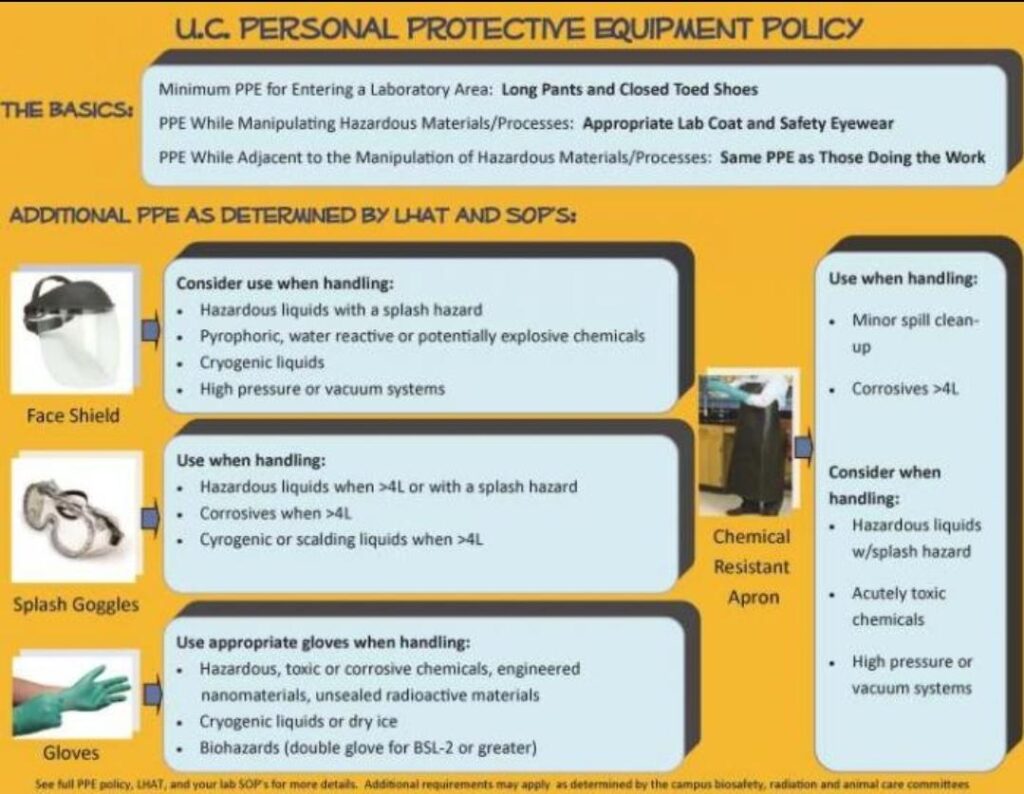
Figure 1: Personal Protective Equipment Requirements in Academic Laboratories. Adapted from Hill, R. H.; Finster, D. C. Academic Leaders Create Strong Safety Cultures in Colleges and Universities. J. Chem. Health Saf. 2013, 20 (5), 27–34. https://doi.org/10.1016/j.jchas.2013.06.002.
Laboratory risk assessment workflow.
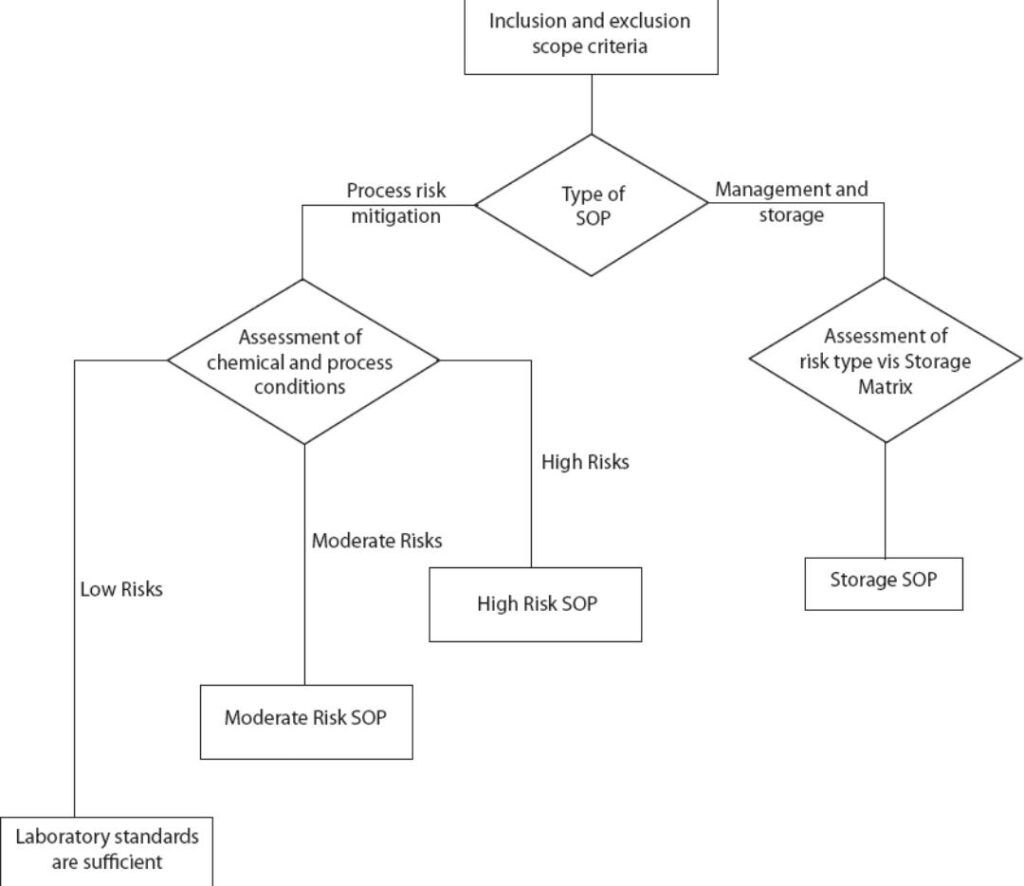
Figure 2: Laboratory Risk Assessment and Hazard Identification Workflow. Adapted from Marendaz, J. L.; Suard, J.-C.; Meyer, T. A Systematic Tool for Safety Culture Assessment in Academic Laboratories. Saf. Sci. 2022, 152, 105782. https://doi.org/10.1016/j.ssci.2022.105782.
Discussion
Recent research confirms that laboratory negligence and student safety remains a systemic challenge across universities. Unsafe behaviors, insufficient training, and weak supervision consistently appear in accident analyses [1][3].
Unlike industrial laboratories, universities balance education and research productivity. This structure can reduce emphasis on procedural discipline and complicate safety enforcement [4]. As a result, negligence often arises from normalized shortcuts rather than deliberate misconduct.
Addressing laboratory negligence and student safety requires integrated strategies that combine training, leadership engagement, structured risk assessment, and transparent reporting. Institutions that prioritize these measures reduce accident frequency and improve safety outcomes [1][4].
Administrative analysis
Institution-specific budgeting and procurement policies tend to vary widely and thus, are not examined in this analysis.
Conclusion
Laboratory negligence and student safety remains a critical issue in higher education laboratories. Recent scholarly research from 2022–2026 demonstrates that preventable incidents continue to occur due to unsafe behaviors, insufficient supervision, and fragmented safety cultures [1][4].
Universities must adopt comprehensive prevention strategies to reduce negligence. Structured risk assessment, continuous training, leadership engagement, and clear accountability frameworks improve compliance and protect student researchers. Strengthening these systems ensures that laboratory negligence and student safety becomes a central priority within academic research environments.
References
[1] Xu, C.; Li, Y.; Zhang, H.; et al. Current Challenges of University Laboratory Safety Management: Characteristics and Case Analysis. J. Loss Prev. Process Ind. 2023, 83, 105057. https://doi.org/10.1016/j.jlp.2023.105057.
[2] Wu, G.; Li, X.; Zhao, Y.; et al. Determination of University Students’ Laboratory Safety Knowledge and Practices. J. Chem. Educ. 2023, 100 (9), 3387–3395. https://doi.org/10.1021/acs.jchemed.3c00305.
[3] Lin, Y.; Li, Y.; Liao, Z.; Deng, M. Analysis and Management of Laboratory Safety Causes in Universities: A Case Study of J University. Adv. Appl. Sociol. 2024, 14, 89–103. https://doi.org/10.4236/aasoci.2024.142006.
[4] Marendaz, J. L.; Suard, J.-C.; Meyer, T. A Systematic Tool for Safety Culture Assessment in Academic Laboratories. Saf. Sci. 2022, 152, 105782. https://doi.org/10.1016/j.ssci.2022.105782.
[5] Kemsley, J. UCLA Professor Sentenced in Lab Safety Case. Chem. Eng. News 2012, 90 (24), 10–11. https://doi.org/10.1021/cen-09024-news1.